
Our Collections











Power Banks
-
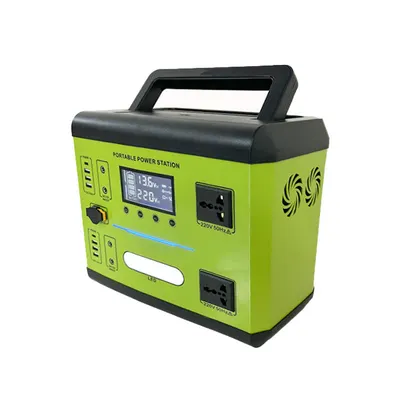
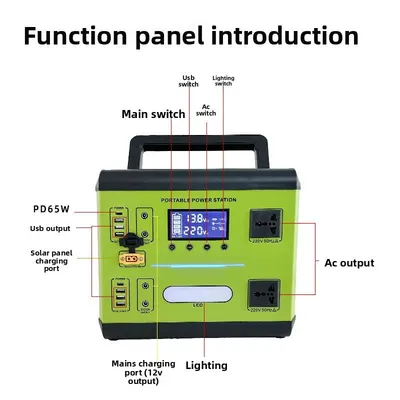
Outdoor Portable Power Bank High Capacity Multi Device
Regular price From $211.37Regular priceSale priceFrom $211.37
No products match these filters. Remove all
A power bank from Global Swanky keeps your phone charged on the go, with magnetic wireless, slim, high-capacity and solar designs from 5,000mAh to 30,000mAh. Prices start at $12.65, with free US shipping.
Key Takeaways
- Our power bank collection lists 9 products, priced from $12.65 to $47.59 as of October 7, 2026.
- Six are magnetic wireless designs for phones, and three are high-capacity or solar models with 10,000mAh to 30,000mAh options.
- The FAA limits spare lithium-ion batteries, including power banks, to carry-on bags only, at up to 100 watt-hours each without airline approval.
- A 30,000mAh battery at 3.7V is about 111Wh, so it needs airline approval before you fly with it.
- Expect a power bank to deliver roughly two-thirds of its rated capacity to your phone, because of conversion and heat losses.
On this page
- What Is a Power Bank?
- What's in Our Power Bank Collection?
- Types of Power Banks
- Understanding Power Bank Capacity
- Charging Speed and Ports
- Features to Look For
- Charging Different Devices
- Flying with a Power Bank
- How to Choose a Power Bank
- Using It for the First Time
- Power Banks for Different Needs
- Magnetic Power Banks and Phones
- Power Bank Safety
- How to Make Your Power Bank Last
- Common Myths
- Picking Capacity for Your Phone
- How Much Does a Power Bank Cost?
- Shipping, Returns and Support
- Power Bank FAQs
- Find the Right Power Bank
What Is a Power Bank?
A power bank is a portable rechargeable battery that charges your phone, earbuds, smartwatch or tablet when you're away from a wall socket. It's also called a portable charger, battery pack or external battery.
You charge it at home, then carry it in a bag or pocket and plug in your device, or place it on top for wireless charging, whenever the battery runs low.
How a power bank works
Lithium-ion or lithium-polymer cells store energy, much like the battery inside your phone. A control circuit manages charging and discharging, protects against overheating and short circuits, and converts the battery's voltage to the 5V or higher that USB devices need.
Wired vs wireless
Wired power banks charge through a cable and are usually faster and more efficient, especially with USB-C fast charging. Wireless power banks let you place a compatible phone on a charging pad, and magnetic models snap onto the back of the phone so you can keep using it.
Power bank vs wall charger
A wall charger needs a socket. A power bank stores energy so you can charge anywhere, but it needs recharging itself, so it works best alongside a good wall adapter.
What's in Our Power Bank Collection?
The collection lists 9 products, all in stock when we updated this page on October 7, 2026.
| Power bank | Capacity options | Key features | From (USD) |
|---|---|---|---|
| Magnetic Suction Charging Bank, Fast Wireless Mobile Charger | 5,000mAh | Magnetic wireless, 4 colours | $12.65 |
| Buy Portable 5000mAh Magnetic Wireless Power Bank Fast Charging | 5,000 and 10,000mAh, multipacks | Magnetic wireless, LED display, USB-C | $16.75 |
| 20000mAh Power Bank, Black Rice Customized Portable Charger | 20,000mAh | Wireless charging, stand | $16.79 |
| Ultra-thin Magnetic Power Bank | 5,000 and 10,000mAh | Slim magnetic design, 3 colours | $19.42 |
| Fast Magnetizing Wireless Power Bank | 5,000mAh | Magnetic wireless, 5 colours | $19.66 |
| Magnetic Wireless Power Bank Magsafe | 5,000 and 10,000mAh | Magnetic wireless, titanium-look finish | $23.57 |
| Buy 30000mAh Power Bank, High Capacity Fast Charging Portable | 30,000mAh | Digital display, high capacity | $30.15 |
| Buy 5000mAh Mini Magnetic Wireless Power Bank Portable Charger | 5,000mAh | Mini magnetic wireless | $34.69 |
| Wireless Solar Charger, Power Bank with Torch for Phones | 10,000 and 20,000mAh | Solar panel, torch, stand | $38.01 |
Details come from each listing on October 7, 2026. Check the ports, output and phone compatibility on each listing before ordering.
Types of Power Banks
Choose the type that fits how you use your phone each day.
Magnetic wireless power banks
Magnetic models attach to the back of compatible phones and charge wirelessly, so there's no cable to carry and you can keep using the phone. They suit phones with built-in magnets or a magnetic case.
Slim and mini power banks
Compact 5,000mAh models slip into a pocket and add roughly one phone charge. They're ideal for daily commutes, nights out and days when you only need a quick top-up.
High-capacity power banks
20,000mAh to 30,000mAh models charge several devices or a phone many times over. They're heavier but suit travel, camping, festivals and long days away from power, and they can charge friends' phones too.
Solar power banks
Solar panels top up the battery in daylight, which helps on camping trips and in emergencies. Solar charging is slow, so charge the battery from a wall socket before you leave.
Power banks with extras
Some models add a phone stand, a torch or a digital display that shows the remaining charge, which makes them more useful on trips. The Wireless Solar Charger, Power Bank with Torch for Phones costs $38.01.
Laptop power banks
Laptop power banks offer high wattage USB-C Power Delivery, often 60W or more. Check the output before buying if you need to charge a laptop.
Understanding Power Bank Capacity
Capacity tells you how much energy the battery stores.
mAh and Wh
Capacity is usually shown in milliamp-hours (mAh) at the battery's internal voltage, often 3.7V. Watt-hours (Wh) combine capacity and voltage, so they give a fairer comparison and are what airlines use.
How to work out watt-hours
Multiply the mAh by the battery voltage, then divide by 1,000. For example, 10,000mAh × 3.7V ÷ 1,000 = 37Wh.
| Capacity | Approximate Wh at 3.7V | Typical phone charges | Flight status |
|---|---|---|---|
| 5,000mAh | 18.5Wh | About 1 | Carry-on, no approval needed |
| 10,000mAh | 37Wh | About 2 | Carry-on, no approval needed |
| 20,000mAh | 74Wh | About 4 | Carry-on, no approval needed |
| 26,800mAh | About 99Wh | About 5 | Carry-on, no approval needed |
| 30,000mAh | 111Wh | About 5 to 6 | Carry-on with airline approval |
Phone charge counts are rough estimates for a phone with a 3,500 to 4,500mAh battery.
Why you get less than the rated capacity
Converting the battery's 3.7V to USB voltage, plus heat and cable losses, means a portable charger usually delivers about 60% to 70% of its rated capacity. Wireless charging loses a little more than a cable.
Charging Speed and Ports
Speed depends on the charger's output and your phone's support.
Output in watts
Output is measured in watts (W). Basic ports give 5W to 10W, while fast-charging ports offer 18W, 20W or more, which can take a phone from empty to half in about 30 minutes.
USB-C and USB-A
USB-C ports usually charge faster and work in both directions, so they can charge the battery itself and your phone. USB-A ports suit older cables and accessories.
Fast-charging standards
USB Power Delivery (PD) is common for phones with USB-C, while Quick Charge works with many Android phones. Your phone, cable and charger all need to support the same standard for full speed.
Wireless charging speed
Magnetic wireless charging is convenient but usually slower than a cable, often 5W to 15W. Remove thick cases for a better connection.
Pass-through charging
Some models can charge themselves and your phone at the same time. This is handy overnight but can make the unit warm.
Features to Look For
A few extra features make portable chargers easier and safer to use.
Battery level display
LED dots or a digital percentage display show how much charge is left, so you know when to recharge.
Built-in cables
Some models include a built-in USB-C or Lightning cable, so you never forget one. Check the connector suits your phone.
Multiple ports
Two or more outputs let you charge a phone and earbuds at the same time. Total output is shared, so each device may charge more slowly.
Protection circuits
Look for overcharge, over-discharge, short-circuit and temperature protection. These features stop the cells from overheating or wearing out early.
Safety certification
Recognised marks, such as UL 2056 for power banks, show the product has been tested to a safety standard. Ask the seller if a listing doesn't say.
Stands and torches
A built-in stand props up your phone for video, and a torch helps on camping trips and in power cuts.
Charging Different Devices
Portable chargers aren't just for phones.
Phones
Most phones charge from a 5,000mAh to 10,000mAh model. Fast-charging phones benefit from 18W or higher USB-C output.
Earbuds and smartwatches
These have small batteries, so even a mini model can charge them many times. Some smartwatches need their own magnetic charging cable.
Tablets
Tablets have larger batteries, often 7,000 to 10,000mAh or more, so choose 20,000mAh and at least 18W output.
Laptops
Laptops usually need 45W to 100W USB-C Power Delivery. Check the laptop's charging requirements before relying on a portable battery.
Cameras and other gadgets
Action cameras, handheld fans, lights and gaming controllers can often charge over USB. Check each device's input rating.
Flying with a Power Bank
Airlines treat power banks as spare lithium batteries, so special rules apply.
Carry-on only
The FAA says spare lithium-ion batteries, including power banks, must be carried in carry-on baggage only, and lithium-ion batteries are limited to 100Wh each. With airline approval, passengers may also carry up to two spare larger batteries of 101 to 160Wh.
What this means for our range
Our 5,000mAh to 20,000mAh options are well under 100Wh. A 30,000mAh model at 3.7V is about 111Wh, so ask your airline for approval before you fly with it.
Check your airline
Some airlines add their own rules, such as not using a power bank during the flight or keeping it visible while charging. Check before you travel, especially on international routes.
Damaged batteries
Don't fly with a battery that's swollen, cracked or recalled.
How to Choose a Power Bank
Follow these steps to find the right one:
- List the devices you'll charge and their battery sizes.
- Choose a capacity: about 5,000mAh for one phone charge, 10,000mAh for two.
- Decide between wired, magnetic wireless or both.
- Check the ports and fast-charging standard your phone uses.
- Think about size and weight for your pocket or bag.
- Check the watt-hour rating if you fly.
- Look for safety protections such as overcharge and short-circuit protection.
Using It for the First Time
Follow these steps when your new charger arrives:
- Check it for damage, such as dents, swelling or loose parts.
- Charge it fully with a suitable USB adapter and cable.
- Check the display or LEDs show a full charge.
- Connect your phone with a cable, or attach it for magnetic charging.
- Disconnect once your phone is charged to save battery for later.
- Recharge it after use so it's ready next time.
Power Banks for Different Needs
Match the size and type to how you'll use it.
Daily commuting
A slim magnetic 5,000mAh model gives an extra charge without weighing you down. The Ultra-thin Magnetic Power Bank costs $19.42.
Travel
A 10,000mAh model offers a good balance of size and capacity, and it's well within airline limits. Pack it in your carry-on with a short cable.
Camping and outdoors
High-capacity and solar models keep phones and lights going for longer. Bring cables for every device, and keep the battery in a dry bag.
Emergencies and power cuts
A charged 20,000mAh model can keep a phone running for days during a power cut. Recharge it every few months so it's ready when you need it.
Festivals and events
Compact magnetic models charge your phone while you keep using it, so you don't miss photos or calls. Pick a bright colour so it's easy to spot in a crowd.
Magnetic Power Banks and Phones
Magnetic models are popular because they're simple to use.
Compatibility
Magnetic models work best with phones that have built-in magnets or a case with a magnetic ring, which keeps the charging coils aligned. Other phones can use a magnetic sticker or ring.
Cases
Thick, metal or wallet cases can block magnetic charging. Use a thin magnetic-compatible case, and remove cards from the back before charging.
Magnets and medical devices
Keep phones and magnetic accessories at least six inches from pacemakers and implanted defibrillators, as the FDA recommends.
Power Bank Safety
Lithium batteries are safe when used and stored properly.
- Use good cables and chargers that match the input rating.
- Don't charge on soft surfaces like beds or sofas, where heat can't escape.
- Keep it out of heat, such as hot cars and direct sun.
- Stop using it if it swells, smells, gets very hot or is damaged.
- Keep it dry, and never charge a wet power bank.
- Don't open or puncture it, as damaged cells can catch fire.
- Recycle it properly at a battery recycling point, never in household waste.
How to Make Your Power Bank Last
Good habits extend battery life.
Avoid deep discharge
Recharge before it's completely empty, and don't leave it flat for months, as deeply drained cells can stop working.
Store it partly charged
For long storage, keep it at about 40% to 60% and top it up every few months.
Avoid extreme temperatures
Heat and cold both shorten battery life. Store it at room temperature, and let a cold battery warm up before charging it.
Use the right cable
A good-quality cable charges faster and reduces heat in both the cable and the battery.
Expected lifespan
Most units last several hundred charge cycles before capacity drops noticeably.
Common Myths
A few beliefs about portable batteries aren't quite right.
"A 10,000mAh battery charges a 5,000mAh phone twice"
Not quite. Conversion and heat losses mean you'll get closer to one and a half charges.
"You must fully drain it before recharging"
That applied to older battery types. Lithium cells prefer partial top-ups and last longer if they're not run flat.
"Wireless charging is just as fast"
Cables are usually faster and more efficient, especially for fast-charging phones.
"Bigger is always better"
More capacity means more weight and, above about 27,000mAh, airline restrictions. Choose the size you'll actually carry.
"Solar panels charge it fully in a day"
The small panels on portable chargers add only a little energy per hour of sun, so treat solar as a backup.
Picking Capacity for Your Phone
Use your phone's battery size as a guide.
| Phone battery | For one full charge | For two full charges |
|---|---|---|
| 3,000mAh | 5,000mAh | 10,000mAh |
| 4,000mAh | 7,000 to 10,000mAh | 15,000mAh |
| 5,000mAh | 10,000mAh | 20,000mAh |
These are rough guides based on about 65% real-world efficiency. Check your phone's battery capacity in its specifications.
How Much Does a Power Bank Cost?
Our power banks range from $12.65 to $47.59. Of 9 listings, 6 start under $25 and 3 start between $25 and $40.
Here's what each price band typically buys across the wider market:
- Under $25: 5,000mAh to 10,000mAh magnetic and basic power banks.
- $25 to $50: 20,000mAh models, solar power banks and faster charging.
- $50 to $100: high-wattage USB-C models for tablets and laptops.
- $100 and up: portable power stations with AC outlets.
Standard US shipping is free on every order.
Shipping, Returns and Support
We ship power banks to US addresses only, and standard shipping is free. Most orders arrive within 6 to 32 business days, and you can track your order once it ships.
Returns are accepted within 30 days of delivery if the item is new, unused and in its original packaging, with no restocking fee. Read the full terms in our return policy, and contact our support team if your order arrives damaged.
Power Bank FAQs
What size power bank do I need?
For one extra phone charge, about 5,000mAh is enough for most people. A 10,000mAh model gives roughly two charges and suits travel, while 20,000mAh or more suits camping, emergencies and charging several devices. Bigger capacity means more weight, so choose what you'll actually carry every day.
How many times will a power bank charge my phone?
Divide about two-thirds of the rated capacity by your phone's battery size. A 10,000mAh model delivers roughly 6,000 to 7,000mAh, so it charges a 3,500mAh phone about twice, or a 5,000mAh phone a little more than once, depending on cable quality.
Can I take a power bank on a plane?
Yes, in your carry-on only. The FAA limits lithium-ion power banks to 100Wh each without airline approval, and up to two between 101 and 160Wh with approval. Power banks aren't allowed in checked bags, and some airlines restrict using them during flights.
Is a 30,000mAh power bank allowed on planes?
At 3.7V, 30,000mAh is about 111Wh, which is over the 100Wh limit. You need airline approval to carry it, and only up to two batteries in that range. Check the Wh rating printed on the device, and carry the approval with you.
Do magnetic power banks work with all phones?
They work best with phones that have built-in magnets or a magnetic case. Other phones can use a magnetic ring or sticker, but the phone must support wireless charging, otherwise you'll need to use a cable. Remove thick cases for a stronger hold.
Is wireless charging slower than a cable?
Usually, yes. Wireless and magnetic charging often runs at 5W to 15W and loses more energy as heat. A USB-C cable with fast charging is quicker and more efficient when you need a fast top-up before heading out, and it keeps the phone cooler.
How long does it take to charge a power bank?
It depends on capacity and input speed. A 5,000mAh model may take 2 to 3 hours, while 20,000mAh or larger can take 6 hours or more. A fast-charging USB-C input and a suitable adapter shorten the time considerably, so check the input rating on the listing.
Can I leave my power bank charging overnight?
Most have overcharge protection, but it's safest to charge on a hard, cool surface away from bedding and unplug once full. Avoid covering it with pillows or blankets. Stop using any battery pack that gets very hot, swells or smells unusual, and recycle it safely.
Do solar power banks charge fully from the sun?
Solar panels on power banks are small, so they charge slowly and work best as a top-up. Charge the power bank fully from a wall socket before a trip, and use the sun to extend it on long trips or during power cuts.
How long does a power bank last?
Most units last several hundred charge cycles, often two to three years, before capacity drops noticeably. Storing them partly charged, avoiding heat and not leaving them empty for months help them last longer. Replace one that no longer holds a useful charge.
How long does shipping take?
Most orders arrive within 6 to 32 business days of being placed. That covers 1 to 2 business days of handling and 5 to 30 business days in transit. Standard shipping is free on every order, and we currently ship to US addresses only.
Can I return a power bank?
Yes, within 30 days of delivery, if it's new, unused, undamaged and in its original packaging. Email support@globalswanky.com with your order number, the product name and the reason for the return, then wait for return instructions. There's no restocking fee.
Find the Right Power Bank
Choosing a power bank comes down to three checks: enough capacity for your devices, the right ports or magnetic charging for your phone, and a watt-hour rating that suits how you travel. A 10,000mAh magnetic model suits most people.
Ready to choose? Scroll up to the product grid and pick the power bank that suits you. For more charging gear, browse our chargers, cables and phone case collections.
- Choosing a selection results in a full page refresh.
- Opens in a new window.

Global Swanky
1 × $0.00 · Free US shipping
$0.00
- 1 Payment
- 2 Shipping
- 3 Done
Checkout is temporarily unavailable.
Please try again in a moment, or email support@globalswanky.com and we will help you order.
Secured by Stripe. Card details go straight to Stripe, never to our servers.
Order confirmed
Thank you. A confirmation is on its way to .
- Order number
- Total paid
- Paid with
- Delivery
- Dispatched within 24 hours, 3–7 business days